Brake Repair Basics: Understanding How Braking Systems Are Structured
Brake repair begins with understanding what the braking system actually consists of. Most passenger vehicles use a hydraulic disc brake system on all four wheels, though some older or lighter vehicles still use drum brakes on the rear axle. Each configuration has distinct components and service requirements.
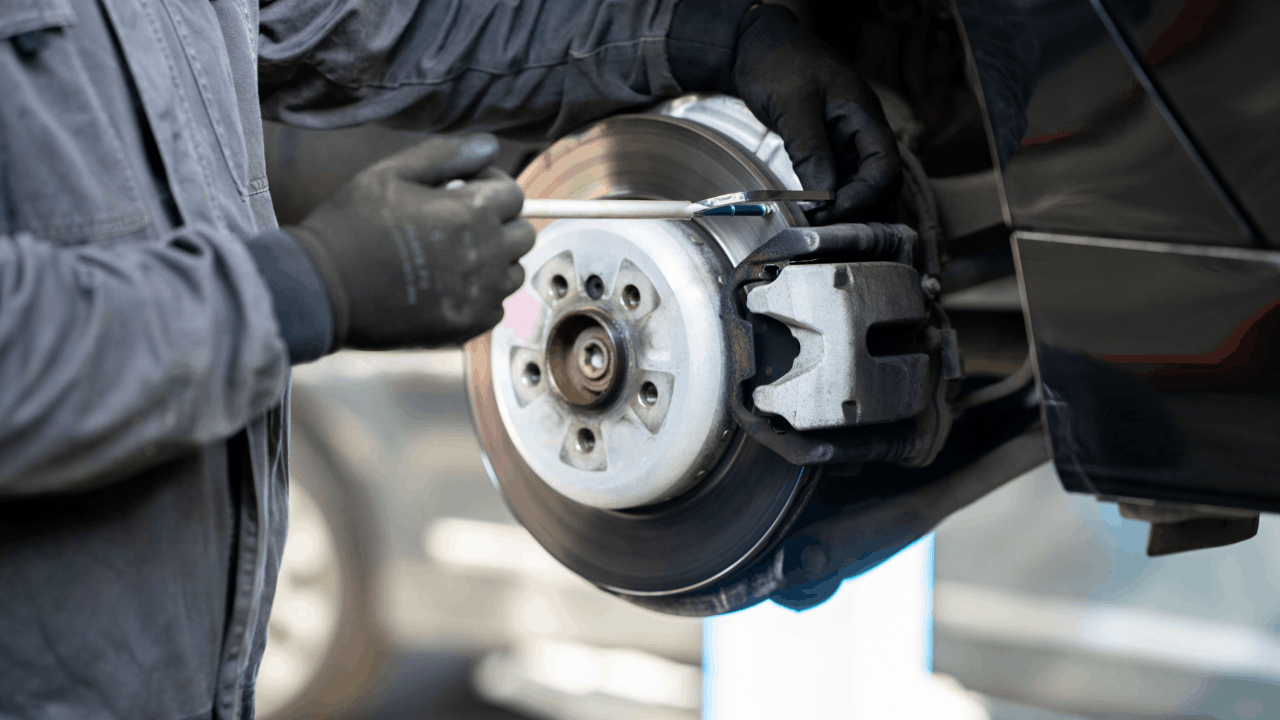
Disc brake systems use a rotating metal rotor attached to the wheel hub. A caliper mounted alongside the rotor houses brake pads. When the driver presses the brake pedal, hydraulic pressure pushes the caliper pistons outward, clamping the brake pads against both sides of the rotor. Friction between the pads and rotor slows the wheel's rotation. Drum brake systems work differently. A circular drum rotates with the wheel, and curved brake shoes press outward against the inner surface of the drum when hydraulic pressure is applied. Drum brakes are less common on modern vehicles but remain in use on rear axles in certain configurations.
The hydraulic circuit connects the brake pedal to each wheel through a series of steel lines, rubber hoses, and the master cylinder. The master cylinder converts pedal force into hydraulic pressure. Any leak, air intrusion, or fluid degradation in this circuit affects braking performance across the entire system. The brake booster uses engine vacuum or an electric motor to amplify the force applied to the master cylinder, reducing the pedal effort required from the driver. A failing booster can make the pedal feel stiff and unresponsive.
Understanding these components helps drivers follow conversations with technicians more clearly and ask more specific questions when brake repair is recommended.
Recognizing the Signs: When Brake Repair Becomes Necessary
Brake systems communicate wear and failure through physical sensations, sounds, and visual indicators. Recognizing these signals early gives drivers the opportunity to have the system assessed before a minor issue develops into a more involved repair.
Squealing or squeaking sounds during normal braking are among the most common early indicators of pad wear. Most brake pads include a small metal wear indicator tab designed to contact the rotor when the pad material reaches a minimum thickness. The resulting high-pitched sound serves as a deliberate warning that pad replacement is due. Grinding noises during braking typically indicate that brake pads have worn completely through and metal-to-metal contact is occurring between the caliper hardware and the rotor surface. This condition accelerates rotor damage and warrants prompt attention.
Pedal behavior changes provide additional diagnostic information. A brake pedal that sinks gradually toward the floor under steady pressure may indicate a leak in the hydraulic circuit or a failing master cylinder. A pedal that pulses or vibrates under braking often reflects rotor thickness variation, commonly called rotor runout or warping. Vehicle pulling to one side during braking can suggest a stuck caliper, uneven pad wear, or a restriction in one of the brake lines. The vehicle drifts toward the side where braking force is greater.
None of these symptoms should be used for self-diagnosis. Each warrants a professional inspection to identify the actual source before any brake repair is authorized.
Brake System Inspection: What a Qualified Technician Actually Evaluates
A thorough brake inspection covers more than a visual check of the brake pads. Understanding what a complete inspection involves helps vehicle owners recognize whether the assessment they receive is comprehensive or superficial.
Brake pad thickness measurement is the starting point. Technicians use a calibrated tool to measure the remaining friction material on each pad. Manufacturer specifications define the minimum acceptable thickness. Pads at or near that threshold are flagged for replacement.
Rotor measurement and inspection involves checking rotor thickness with a micrometer and comparing the measurement against the manufacturer's minimum specification. Rotors that fall below minimum thickness after machining must be replaced rather than resurfaced. Technicians also check for surface scoring, heat discoloration, and runout using a dial indicator.
Caliper inspection assesses whether the caliper pistons retract and extend freely. A seized caliper piston causes the brake pad to remain in constant light contact with the rotor, generating heat, accelerating wear, and reducing fuel efficiency.
ABS and electronic brake system components may require scan tool diagnostics if warning lights are active. The anti-lock brake system relies on wheel speed sensors, a control module, and hydraulic modulator valves. Faults in any of these components are stored as diagnostic trouble codes that a technician retrieves and interprets to identify the specific failure point.
Requesting a written inspection report that covers each of these areas gives you a clear record of the vehicle's brake system condition before any repair decisions are made.
Technician Qualifications: What Credentials Apply to Brake Repair Work
Brake repair sits at the intersection of hydraulic systems, mechanical components, and increasingly complex electronic systems. The credentials that apply to this work reflect that range of technical knowledge.
ASE (Automotive Service Excellence) is the primary certification body for automotive technicians in the United States. The most directly relevant ASE certification for brake repair is:
A5 — Brakes: This certification covers hydraulic system diagnosis, drum brake diagnosis and repair, disc brake diagnosis and repair, power assist units, miscellaneous brake components, and ABS and electronic brake control systems. Technicians holding an active A5 credential have passed a standardized knowledge examination and met hands-on experience requirements in brake system service.
A6 — Electrical and Electronic Systems: This certification becomes relevant when brake repair involves ABS diagnostics, electronic stability control systems, or electronic parking brake mechanisms, all of which rely on sensors, control modules, and wiring systems.
ASE Master Technician designation is awarded to technicians who hold certifications across all eight areas of the automotive service series. A Master Technician working on your vehicle's brakes brings a broader systems understanding that can be valuable when brake symptoms intersect with suspension, steering, or powertrain issues.
When evaluating a brake repair provider, asking which ASE certifications their technicians currently hold — and whether any hold A5 specifically — gives you a concrete basis for assessing technical qualifications rather than relying on general reputation alone.
Evaluating a Provider: Nine Questions to Ask Before Authorizing Brake Repair
Selecting a brake repair provider involves evaluating more than availability. The following questions support a structured approach to comparing providers before committing.
1. Which ASE certifications do your brake technicians currently hold?
Active A5 certification is the most relevant credential. Ask whether the certification is current, as ASE requires recertification every five years.
2. What does your brake inspection process cover?
A complete inspection should address pad thickness, rotor condition, caliper function, hydraulic system integrity, and ABS components where applicable. A vague answer to this question warrants follow-up.
3. Will I receive a written inspection report?
A reputable provider should document inspection findings in writing, including measurements taken and components assessed, before any repair is recommended.
4. What brake parts do you use and where do they come from?
Ask whether the shop uses OEM, OE-equivalent, or aftermarket brake components and whether any aftermarket parts carry independent quality certifications.
5. Are rotors resurfaced or replaced, and what determines that decision?
Understand the standard the shop applies when deciding between resurfacing and replacement. The answer should reference minimum rotor thickness specifications, not a blanket policy.
6. What does your brake repair warranty cover?
Ask for written documentation of what the warranty applies to, including both parts and labor, and for what period.
7. How do you handle ABS or electronic brake system faults?
Confirm the shop has the scan tool capability and technician knowledge to diagnose electronic brake system faults, not just mechanical components.
8. Will you contact me before performing work beyond the original scope?
A trustworthy shop will pause and communicate if additional issues are identified mid-repair rather than proceeding without authorization.
9. Can you explain the repair in plain language?
A qualified technician should be able to describe what failed, why it failed, and what the repair involves in terms a non-specialist can follow.
Brake Fluid and ABS: Two Areas Frequently Overlooked in Brake Service
Two aspects of brake system maintenance are consistently underemphasized in general service discussions: brake fluid condition and ABS system health.
Brake fluid is hygroscopic, meaning it absorbs moisture from the surrounding environment over time. As moisture content in the fluid increases, the fluid's boiling point decreases. Under heavy or repeated braking, degraded fluid with a lower boiling point can vaporize, introducing gas into the hydraulic circuit. Gas compresses under pressure in a way that fluid does not, causing a sudden and significant reduction in pedal firmness — a condition known as brake fade.
The ABS system prevents wheel lockup during hard braking by rapidly modulating hydraulic pressure at individual wheels. It works in conjunction with the traction control system and electronic stability control on most modern vehicles. When an ABS warning light appears, the base hydraulic brakes typically continue to function, but the anti-lock modulation feature is disabled.
Before You Decide: Key Factors in Choosing a Brake Repair Provider
Brake repair decisions carry direct safety implications, which makes the provider selection process worth approaching with care. The condition of a vehicle's braking system affects every trip the vehicle is used for, and work performed by an undertrained technician or with substandard components can create risks that are not immediately apparent.
Verified credentials, transparent inspection documentation, clearly communicated repair scopes, and written warranty terms are reasonable expectations to have of any brake repair provider. Shops that meet these standards without hesitation tend to be the ones operating with consistent professional accountability.
Taking time to ask the right questions before authorizing any brake repair work puts you in a stronger position to evaluate your options and make a decision based on verified information rather than assumptions.
Browse and Compare: Find Brake Repair Providers on NextQuote
NextQuote provides a platform where drivers can access verified brake repair providers, review service information, and submit quote requests tailored to their vehicle and specific repair needs. Rather than contacting multiple shops individually, NextQuote allows you to gather and compare provider information through a single, easy-to-navigate platform, giving you a clearer picture of your available options before making a decision.
The platform is intended as an informational and comparison resource. NextQuote does not endorse or guarantee the quality of any listed provider, and drivers are encouraged to perform their own evaluation before committing to any service agreement. If you own a brake repair business and want to expand your reach, list your business on NextQuote today. Have a question about how the platform works? Reach out to us and we will be glad to assist.
Frequently Asked Questions
-
What Does ASE A5 Certification Mean for Brake Repair Technicians?
ASE A5 is a brake-specific certification covering hydraulic systems, disc and drum brake diagnosis, power assist components, and ABS electronic brake systems. Technicians holding this credential have passed a standardized knowledge exam and demonstrated hands-on experience. The certification must be renewed every five years to remain active and current.
-
How Often Should Brake Fluid Be Replaced as Part of Brake Service?
Brake fluid replacement intervals vary by manufacturer, but many recommend evaluation every two years regardless of mileage due to moisture absorption over time. A technician can test the fluid's moisture content using a refractometer or test strip to determine whether a flush is warranted based on actual fluid condition rather than time alone.
-
What Is the Difference Between Brake Pad Replacement and a Full Brake Repair?
Brake pad replacement addresses only the friction material on the pads. A full brake repair may include rotor resurfacing or replacement, caliper service, hydraulic component inspection, and brake fluid evaluation. The scope depends on what the inspection reveals rather than a preset service package.
-
Can I Drive Safely If My ABS Warning Light Is On?
When an ABS warning light is active, the base hydraulic braking system typically continues to function, but the anti-lock modulation feature that prevents wheel lockup during hard braking is disabled. The vehicle can still be stopped, but without ABS protection in emergency situations. A diagnostic assessment is appropriate to identify the specific fault.
-
What Causes a Brake Pedal to Feel Soft or Spongy?
A soft or spongy brake pedal typically indicates air in the hydraulic circuit, brake fluid contamination with moisture, or an internal leak in the master cylinder. Each cause requires a different repair approach. A technician should inspect the full hydraulic system to identify the source before any brake repair is recommended or performed.
Key Takeaways
-
Brake repair covers disc and drum systems, hydraulic circuits, brake boosters, calipers, and electronic ABS components, each requiring specific inspection and service procedures.
-
ASE A5 certification in brakes is the primary credential indicating that a technician has demonstrated verified knowledge of hydraulic, mechanical, and electronic brake system service.
-
A complete brake inspection should include pad thickness measurement, rotor assessment with a micrometer, caliper function evaluation, hydraulic system review, and ABS diagnostic scanning where applicable.
-
Brake fluid absorbs moisture over time, which lowers its boiling point and can contribute to brake fade under heavy use — making fluid condition an important part of routine brake service.
-
Written inspection reports, itemized repair documentation, and clearly stated warranty terms are reasonable standards to expect from any qualified brake repair provider.