Know The Basics: What Car Body Paint Actually Involves and Why Each Step Matters
Car body paint is more than applying color to a surface. It is a multi-stage process that requires preparation, technical knowledge, and quality materials. Skipping any step can compromise the final result.
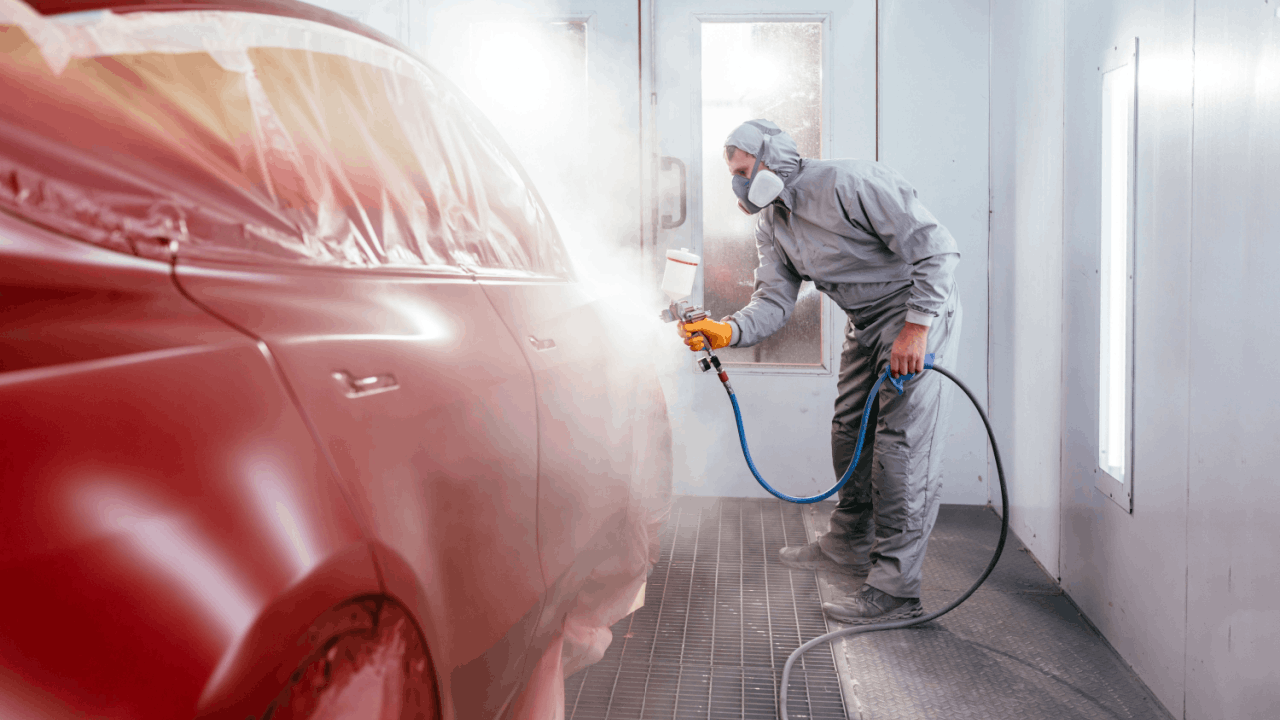
The process typically begins with surface preparation. Technicians sand, clean, and sometimes strip the existing coating before applying primer. Primer creates adhesion between the metal and the topcoat, while also providing a base that helps color appear true and consistent. After priming, the color coat is applied in multiple thin layers. This is where color matching becomes critical. Professionals use spectrophotometers and manufacturer paint codes to achieve an accurate match, especially important when repainting individual panels alongside existing ones.
The final stage involves a clear coat layer that adds gloss and protects the color from UV exposure and minor abrasions. Curing time and polishing complete the process. Understanding each stage helps you ask the right questions when meeting with a body shop, and helps you identify when a quote is missing steps that matter.Scope Matters First: Car Body Paint Types and When Each One Applies to Your Situation
The type of car body paint service required depends on the nature and extent of the work being done. Identifying the correct service category before requesting quotes helps you gather more accurate and comparable estimates from different providers.
Spot Repair and Touch-Up
Spot repair addresses isolated areas of damage such as chips, scratches, or small scuffs. The technician applies color to the affected area and blends it into the surrounding finish. The quality of the result depends on the accuracy of the color match and the technician's blending technique.
Panel Repainting
When damage covers a larger area of a single panel, or when spot repair is not sufficient to achieve an even finish, full panel repainting may be the more appropriate approach. The entire panel is prepared, primed, painted, and clear coated as a unit.
Full Vehicle Respray
A full respray involves repainting the entire exterior of the vehicle. This service is typically considered for vehicles with widespread oxidation, significant surface damage, or when a color change is desired. It requires complete masking of glass, trim, and mechanical components, and in some cases partial disassembly.
Specialty Finishes
Matte, satin, metallic, and pearl finishes require different products and application methods compared to standard gloss finishes. Not every shop has the equipment or trained staff to work with these finishes. Confirming relevant experience before selecting a provider is a practical step when specialty finishes are involved.
Clarifying the scope of work needed before approaching providers helps ensure that quotes are based on the same set of requirements, making comparison more straightforward.
Credentials Reveal Professionalism: Car Body Paint Industry Standards That Signal a Qualified Professional
The automotive refinishing industry operates within a framework of training standards, environmental regulations, and facility requirements. Familiarity with these standards helps you identify professionals who operate within recognized guidelines.
I-CAR Certification
The Inter-Industry Conference on Auto Collision Repair, known as I-CAR, provides training programs and professional development resources for technicians working in collision repair and vehicle refinishing. I-CAR certification indicates that a technician has completed structured training in recognized methods for surface preparation, color application, and finishing.
OEM Paint Standards
Some repair facilities hold certifications issued by original equipment manufacturers authorizing them to use approved repair materials and follow brand-specific procedures. These certifications are relevant when working on newer vehicles that may have manufacturer-specified coating systems or substrates.
VOC Compliance
Volatile organic compound regulations govern the types of paints, primers, and solvents that shops are permitted to use. These regulations vary by jurisdiction and are enforced by environmental agencies. Shops that use compliant materials operate within the legal requirements applicable to their location.
Spray Booth Standards
Professional paint application requires a controlled environment. Certified spray booths maintain consistent temperature, humidity, and airflow conditions during application and curing. The absence of a proper spray booth environment can affect the consistency and durability of the applied finish.
Asking providers about their certifications, compliance practices, and facility equipment is a reasonable part of the evaluation process and helps you make a more informed comparison.
Look Beyond Price: How to Evaluate a Car Body Paint Professional Before You Commit
Selecting a car body paint professional involves reviewing several factors beyond the quoted amount. The following steps provide a structured approach to evaluating providers before making a hiring decision.
Verify Certifications and Affiliations
Ask whether the shop or its technicians hold I-CAR certifications, manufacturer approvals, or memberships in recognized trade associations such as the Automotive Service Association. These affiliations indicate participation in ongoing professional development.
Request to Review Previous Work
Ask the shop for examples of completed jobs that are similar in scope or finish type to your vehicle. Look for consistency in color, smoothness of the surface, and clean edges along panel boundaries.
Review the Written Estimate in Detail
A written estimate should specify the preparation steps included, the number of coats to be applied, the materials or product lines being used, and the warranty terms offered. Estimates that omit these details make it difficult to compare quotes from different providers on an equivalent basis.
Confirm Warranty Terms in Writing
Ask whether the shop provides a written warranty on its paint work and review the specific terms before proceeding. A written warranty documents what the shop is prepared to stand behind and under what conditions.
Consult Independent Reviews
Look for reviews on platforms that are not affiliated with the shop being evaluated. Pay attention to comments about color accuracy, communication, turnaround time, and how the shop responded when issues arose.
Visit the Facility Before Committing
Observing the shop's facility in person provides useful context. A professionally maintained workspace with organized equipment and a dedicated spray booth environment is a reasonable indicator of how the shop approaches its work.
Ask About Technician Experience
Find out who will be working on your vehicle and what their relevant experience is. Ask specifically about their familiarity with your vehicle type, the finish required, and any prior experience with similar repair scopes.
Applying these steps consistently across multiple providers gives you a more reliable basis for comparison than cost alone.
Assumptions Cost You: Common Car Body Paint Misunderstandings That Lead to Poor Decisions
Several widely held assumptions about automotive paint work are inaccurate and can lead to uninformed decisions or unrealistic expectations. The following clarifications are provided for informational purposes.
Color Matching Is a Technical Process, Not an Exact Science
Even when a technician uses the correct paint code and professional color-matching equipment, an exact visual match between a newly painted area and adjacent aged surfaces is not always achievable. Variables such as UV exposure history, previous repair work, and manufacturer color variation across production runs all affect the outcome. Experienced technicians use blending techniques to minimize visible differences, but outcomes vary based on these factors.
Cost Is One Variable Among Many
A lower quoted amount does not necessarily indicate inferior work, and a higher quoted amount does not independently confirm higher quality. Differences in quoted amounts often reflect differences in preparation scope, materials selected, shop overhead, or technician experience. Reviewing what each quote includes is more informative than using cost as a standalone indicator.
Specialty Finishes Require Specific Expertise
Matte, satin, and metallic finishes involve products and application techniques that differ from standard gloss finishes. Shops that primarily handle standard refinishing work may not have the equipment or trained staff required for specialty finishes. Verifying relevant experience before selecting a provider is advisable when your vehicle requires a non-standard finish.
Consumer Touch-Up Products Serve a Different Purpose
Retail touch-up products are formulated for minor cosmetic coverage and are not equivalent to professional refinishing materials applied under controlled conditions. They are not intended as a substitute for professional repair work when adhesion, durability, or color consistency is a priority.
These clarifications are offered to support more informed decision-making when evaluating service providers and interpreting quotes.
Arrive Fully Prepared: What to Prepare Before Requesting a Car Body Paint Quote
Gathering relevant information before contacting providers helps you request accurate estimates and compare responses on a consistent basis. Document the area requiring work with clear photographs taken in natural daylight from multiple angles. Note your vehicle's make, model, year, and factory paint color, as these details affect material selection and preparation requirements.
Define the outcome you are seeking before reaching out. Whether the goal is restoring the original appearance, addressing specific damage, or changing the color entirely, communicating a clear objective helps providers give you estimates that reflect the actual scope of work. Prepare a consistent set of questions to ask each shop you contact. Asking the same questions across multiple providers allows you to compare responses directly and identify where providers differ in their approach or transparency.
Confirm whether your vehicle will require any disassembly prior to painting, such as removal of trim pieces, door handles, or glass. Some providers include disassembly and reassembly in their quoted scope while others treat it as a separate item. Clarifying this in advance helps you avoid unexpected additions to the final amount.
Arriving at conversations with providers in a prepared and informed state generally results in more detailed and transparent communication from the shop.
Compare Before Deciding: Choosing a Car Body Paint Professional With Confidence Starts Here
Selecting a car body paint professional is a practical decision that benefits from research, comparison, and direct communication with providers. The information in this guide is intended to support that process by explaining what the work involves, what standards exist in the industry, and what factors are worth examining before making a hiring decision.
No outcome can be guaranteed in advance of any service engagement. The factors outlined here are provided as general educational guidance to assist with the evaluation process. Individual results will vary based on the specific scope of work, the condition of the vehicle, the materials used, and the technician performing the job.
Taking time to compare multiple providers, review credentials, and request detailed written estimates is a reasonable approach to making an informed decision.
Start Your Search: Find and Compare Car Body Paint Professionals
NextQuote is an informational platform that helps vehicle owners locate and compare verified car body paint professionals. Users can browse provider listings, review available information, and submit quote requests to multiple professionals in one place.
NextQuote does not guarantee the quality of any service provider listed on the platform, and the information provided through the platform is intended for general informational purposes only. Users are encouraged to register your business on the platform and conduct their own due diligence when evaluating any professional before entering into a service agreement.
If you are in the process of researching car body paint professionals, contact us today or visit NextQuote to explore available providers in your area.
Frequently Asked Questions
-
What is car body paint and how does the process work?
Car body paint refers to the layered coating system applied to a vehicle's exterior, which typically includes primer, a color coat, and a clear coat. The process begins with surface preparation and proceeds through each coating stage before finishing with curing and polishing. The outcome depends on the quality of each stage.
-
How do I know if a car body paint professional is qualified?
Relevant indicators include I-CAR certification, manufacturer repair approvals, and membership in trade associations such as the Automotive Service Association. Reviewing previous work, visiting the facility, and asking about the technician's experience with your vehicle type and finish are also reasonable steps in the evaluation process.
-
How long does a professional car body paint job typically take?
Completion time varies depending on the scope of work, the condition of the vehicle, and the shop's current workload. A single panel repair may take one to three business days. A full vehicle respray may take several days to more than a week. Confirming an estimated timeline with your provider before work begins is advisable.
-
What information should a car body paint written estimate include?
A written estimate should specify the preparation steps to be performed, the number of coating layers to be applied, the materials or product lines being used, whether disassembly is included, the estimated completion timeframe, and the warranty terms being offered. Estimates that omit these details are more difficult to compare accurately.
-
Can car body paint be color matched on older or previously repaired vehicles?
Color matching on vehicles with aged or previously repaired paint is more complex due to factors such as UV fading and prior refinishing work. Technicians use color-matching equipment and blending techniques to work toward the closest achievable match. Results vary based on the specific condition of the vehicle and the affected area.
Key Takeaways
-
Car body paint is a multi-stage process involving surface preparation, primer, color coat, and clear coat, and the quality of each stage affects the overall result.
-
Industry certifications such as I-CAR and OEM approvals are informational indicators of a technician's training and the standards a shop follows.
-
Evaluating providers based on certifications, documented previous work, written estimates, and facility conditions provides a more complete basis for comparison than cost alone.
-
Common assumptions about color matching accuracy and finish compatibility are not always accurate, and understanding these limitations supports more realistic expectations.
-
NextQuote is an informational platform where users can locate verified car body paint professionals, compare providers, and submit quote requests for their own review and consideration.